Switching energy supplier is one of the highest-return, lowest-effort jobs you can do with 10 minutes. You can switch electricity supplier, switch gas supplier, or switch gas and electricity together. The process is the same.
The average UK household on a default tariff overpays by £200+ a year simply because they have not switched. The energy industry has spent decades making people think a switch is complicated.
It is not.
This guide covers the full energy switch process UK households face: what you need, what happens when you switch energy supplier, what can go wrong, and the insider tips suppliers do not advertise. Looking at how to switch to Octopus Energy, switch to OVO Energy, switch to EDF Energy, switch to British Gas, or switch to E.ON Next? The steps are the same.
The short version: Find a cheaper energy tariff. Sign up online (10 minutes). Your new supplier handles the rest. Switch completes in 5 working days. Power stays on throughout. You get £30 automatic compensation if it takes longer.
How SwitchPilot researched this guide: our energy team walked the actual UK switch process against the Ofgem rules, the Citizens Advice guidance, and the Energy Ombudsman's complaints data, current as of May 2026. The 7 steps below are ordered by what genuinely trips people up in practice (debt, exit fees, meter type), not by what the rules say in theory. We update the guide when Ofgem changes how the process actually works.
What Do I Need to Switch Energy Supplier?
To change energy supplier, you need little. Switching your energy needs almost nothing from you. The minimum:
- Your address
- Current supplier name (check a recent email if you've forgotten)
- Bank details for paying by Direct Debit
That's genuinely it for most switches. Helpful but not always required:
- Meter readings - your new supplier will estimate without them, but readings stop disputes
- MPAN number - the 13-digit electricity supply number on your bill
- MPRN number - the 6-10 digit gas supply number on your bill
- Current tariff name - useful for checking exit fees, but not required
Don't delay switching because you can't find your MPAN. Your new supplier locates it via industry databases. Having it just speeds things up slightly.
Step-by-Step: How to Switch Energy Supplier
Find a better energy tariff
Use SwitchPilot's tariff tracker to compare energy prices from OVO, Octopus, EDF, British Gas, and more. Zero commission bias. Updated weekly.
Look at unit rates (p/kWh) and standing charges (p/day), not just headline annual cost estimates - those estimates assume average usage that may not match yours.
Cheapest energy supplier UK lists shift weekly as the energy market moves, so always check current rates before you sign up.
Check for energy supplier exit fees
On a fixed energy tariff, you may face early exit fees - usually £30-60 per fuel. Log into your online account and look for "contract end date" and "exit fees".
Key rule: no exit fees apply within the 49 day window before your contract end date. On a rolling contract with no end date? Zero exit fees.
Exit fee example: Exit fee £60. New tariff saves £20 a month. Break-even: 3 months. After that: pure £240 annual saving. If the maths works within 6 months, pay an exit fee and switch anyway. Don't let a one-off fee keep you on an expensive tariff for years.
Switch energy supplier with debt: check the rules
Energy debt can block a switch. Log into your online account and check your balance. The rules:
Cannot switch: You've owed money for more than 28 days. Settle the debt first.
Can switch: Debt is less than 28 days old (added to your final bill). Prepayment meter switch supplier rules: prepayment customers can switch with debt up to £500 per fuel (£1,000 max total).
Sign up with your new supplier
Go to their website and fill in the form. They will ask for your address, current supplier name, meter readings (if you have them), and payment method. Takes 10 minutes.
How to switch to Octopus Energy, how to switch to OVO, or any other electricity provider - the process is the same.
Red flag: If the signup process feels painful or confusing, find a different supplier. In 2026 this should be clean and simple. Complicated onboarding signals poor customer service later.
Your new supplier handles the rest
That's it - you're done. Your new supplier contacts your old one and arranges the switch.
You will get a confirmation email straight away, then a completion notification about 5 working days later. You have a 14 day cooling off period for energy contracts. Cancel free if you change your mind. No penalty, no questions asked.
Don't cancel your old Direct Debit yet. Wait until your old supplier sends and you have paid the final bill. Cancelling too early triggers billing disputes.
Switch completes (5 working days)
Since 2022, the Energy Switch Guarantee requires Ofgem-licensed suppliers to complete switches within 5 working days. Your power stays on throughout. No engineer visit, no interruption.
Take meter readings on the day the switch completes. Send them to both suppliers. This stops billing disputes.
£30 compensation energy switch rule: If your new supplier takes longer than 5 working days, they must pay you £30 - automatically. The supplier must put £30 into your account or send a cheque without you asking. Energy switch delayed compensation kicks in by default.
Settle your final bill and you're done
Your old supplier sends a final bill within 6 weeks. Pay any balance owed, or get a refund if you're in credit - by law, suppliers must refund within 10 working days. Then cancel your old Direct Debit.
Total active time on your part: about 12 minutes.
How Long Does It Take to Switch Energy Supplier?
The full energy switch process takes 5 working days from signup to completion. Here's the day-by-day timeline:
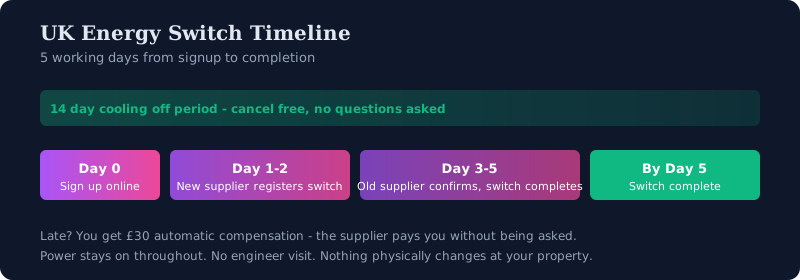
| Timeframe | What Happens |
|---|---|
| Day 0 | You sign up with new supplier online |
| Day 0-14 | Cooling-off period - cancel free, no questions asked |
| Day 1-2 | New supplier registers the switch with industry systems |
| Day 3-5 | Old supplier confirms, switch completes |
| By Day 5 | Switch complete (£30 automatic compensation if delayed) |
| Within 6 weeks | Old supplier sends final bill |
| Within 10 working days | Old supplier must refund any credit balance |
Insider Tips Suppliers Don't Tell You
SwitchPilot's view from talking to suppliers and watching customer switches in 2026: most of the friction comes from things suppliers don't advertise. The five tips below are the ones that actually move the needle on what you pay.
When should I switch energy supplier? Mid-contract, if the savings justify it
Don't wait for your fixed tariff to end if a cheaper deal exists now. Do the maths: monthly saving times 6 months vs the exit fee. If switching recoups the exit fee within 6 months, pay an exit fee and switch now.
Never auto-renew a fixed energy tariff
When your fixed deal ends, suppliers roll you onto their default tariff - their most expensive rate. This costs £200+ per year more than a competitive fixed deal. The energy price cap caps how much default tariff customers can be charged per unit and per day, but the cap itself is still expensive.
Set a calendar reminder 6-7 weeks before your contract end date, or check SwitchPilot's tariff tracker when better deals come live.
Use the 14 day cooling off period for energy as a test drive
Not sure about a supplier's customer service reputation? Switch anyway, use their onboarding for two weeks, and cancel free if it's poor. Zero risk. Comparing energy suppliers UK households trust is easier when you can experience them first.
Don't switch for tiny savings
Switching energy suppliers for £5-10 a year isn't worth the admin. Aim for at least £50 a year in savings. On an expensive default tariff overpaying by £200 or more, switch immediately - saving money is the whole point.
Take meter readings on switch completion day
Send readings to both your old and new suppliers on the day your switch completes. This stops estimated final bills. Suppliers tend to estimate high, so your own readings protect you.
Common Switching Myths Debunked
Will my power go off when switching energy?
No. Your power stays on throughout the switch - the law guarantees it. Your electricity and gas keep flowing. Nothing physically changes at your property.
Do I need an engineer to visit?
No. Suppliers handle the switch remotely via industry systems. No one needs to visit your property.
It sounds complicated
It isn't. You fill in one online form. The suppliers handle the rest. If it feels complicated, you're overthinking it - or the supplier has a poor website.
Will my smart meter stop working?
SMETS2 meters installed from 2018 onwards stay fully smart after switching. Older SMETS1 meters may lose smart functions for a while. They still work as normal meters. Ask your new supplier for a free SMETS2 upgrade.
I have to use Direct Debit
No. Paying by Direct Debit is the most common method - and usually the cheapest. You can also pay by prepayment meter, monthly card, or bank transfer with some suppliers.
What to Do If Something Goes Wrong
Switch delayed beyond 5 days
Contact your new supplier. They are responsible for completing the switch on time. Your supplier must pay £30 automatic compensation. If they don't help, escalate to the Energy Ombudsman complaints process (free service).
Being charged by both suppliers
Take meter readings straight away. Contact both suppliers with the readings and your switch date. One has billed wrong. Most suppliers fix this within a few days.
Switched without your permission (erroneous transfer energy)
Contact the supplier immediately. Ofgem rules require them to switch you back at no cost. Erroneous transfer energy cases are rare - usually an address mixup.
Unhappy with your new supplier
Within 14 days? Use the cooling off period. After 14 days? Switch again. You can switch electricity suppliers or gas suppliers as often as you like. For serious unresolved complaints, contact the Energy Ombudsman complaints process after 8 weeks - or straight away if the supplier issues a deadlock letter.
How Often Should You Switch?
Minimum: Every time your fixed tariff ends (usually every 12-24 months).
Optimal: Check every 3-6 months. Switch if you find savings of £50 or more a year. The energy market moves and energy costs shift quarterly with the price cap, so the cheapest deal today might not be cheapest in three months.
65% of UK households sit on expensive default tariffs because they do not switch supplier regularly. The average household overpays by £200+ per year. Over five years, that totals £1,000+ lost. The energy industry relies on customer inertia. Switching is how you opt out.
Before You Switch: Checklist
- Found a cheaper tariff saving at least £50 a year
- Checked contract end date and energy supplier exit fees
- Calculated whether to pay an exit fee or wait
- Confirmed no debt older than 28 days
- Current meter readings ready
- Bank details ready for paying by Direct Debit (if applicable)
- Reminder set to take readings on switch completion day
- Reminder set to check tariffs again in 6 months
Frequently Asked Questions
How long does it take to switch energy supplier?
Five working days. Since 2022, Ofgem rules under the Energy Switch Guarantee require all switches to complete within five working days of signup. Late completion triggers automatic £30 compensation energy switch payments.
Will my power go off when switching energy?
No. Your power stays on throughout the switch - the law guarantees it. No engineer visit, no interruption. Nothing physically changes at your property.
Can I switch energy supplier if I rent?
Yes, if your name is on the energy account. Ofgem rules override any rental contract clause claiming to prevent switching. If your landlord pays for your energy and recharges you, you cannot switch.
Can I switch if I have a prepayment meter?
Yes, though fewer tariffs are available. Some suppliers can get a credit meter installed (Direct Debit) as part of the process. With debt up to £500 per fuel, you can still switch.
Can I switch if I have solar panels?
Yes, but make sure your new supplier offers export payments under the Smart Export Guarantee (SEG). Not all do. Check before switching or you'll lose your export income.
What if I'm moving home?
Don't switch - choose your supplier when you move in instead. Moving home counts as a new connection, not a switch. Pick any supplier from day one. No formal switch process needed.
Can I switch gas and electricity to different suppliers?
Yes. Dual fuel deals (same supplier for both fuels) are usually slightly cheaper and simpler. You do not have to use one supplier for gas and electricity.
What if I have Economy 7 or Economy 10?
Verify your new supplier supports your meter type before signing up. Most do, but check - switching to a supplier who doesn't could mean losing your off-peak rates and standing charges discount.
What if I change my mind after switching?
You have a 14 day cooling off period for energy contracts. Cancel free of charge, no penalty, no questions asked. After 14 days you can still switch again - no limit on how often you switch.
Sources & References
- Ofgem - Switching energy supplier guide
- Ofgem - Getting a refund when switching
- Ofgem - Switching with debt
- Ofgem - Standards of conduct and consumer protection rules
- Citizens Advice - Switching energy supplier
- Energy Ombudsman - Free dispute resolution service
This article does not constitute financial or energy advice. Always verify current Ofgem rules at ofgem.gov.uk before making decisions.